Obituary: Lt Col Dharam Pal Balyan, A lessons in transformation (10 Oct 1946 – 21 Oct 2023)
The news of his death came to me as a message in the middle of a work video call. It felt like a bad joke as I read the one-line message from my mother. She was in too much of a shock to say much else. I politely announced that I had to drop off for a family emergency. It must have come across as being rude since I had called for the meeting, and it was something really important, but now it was totally irrelevant to me. My world had crashed.
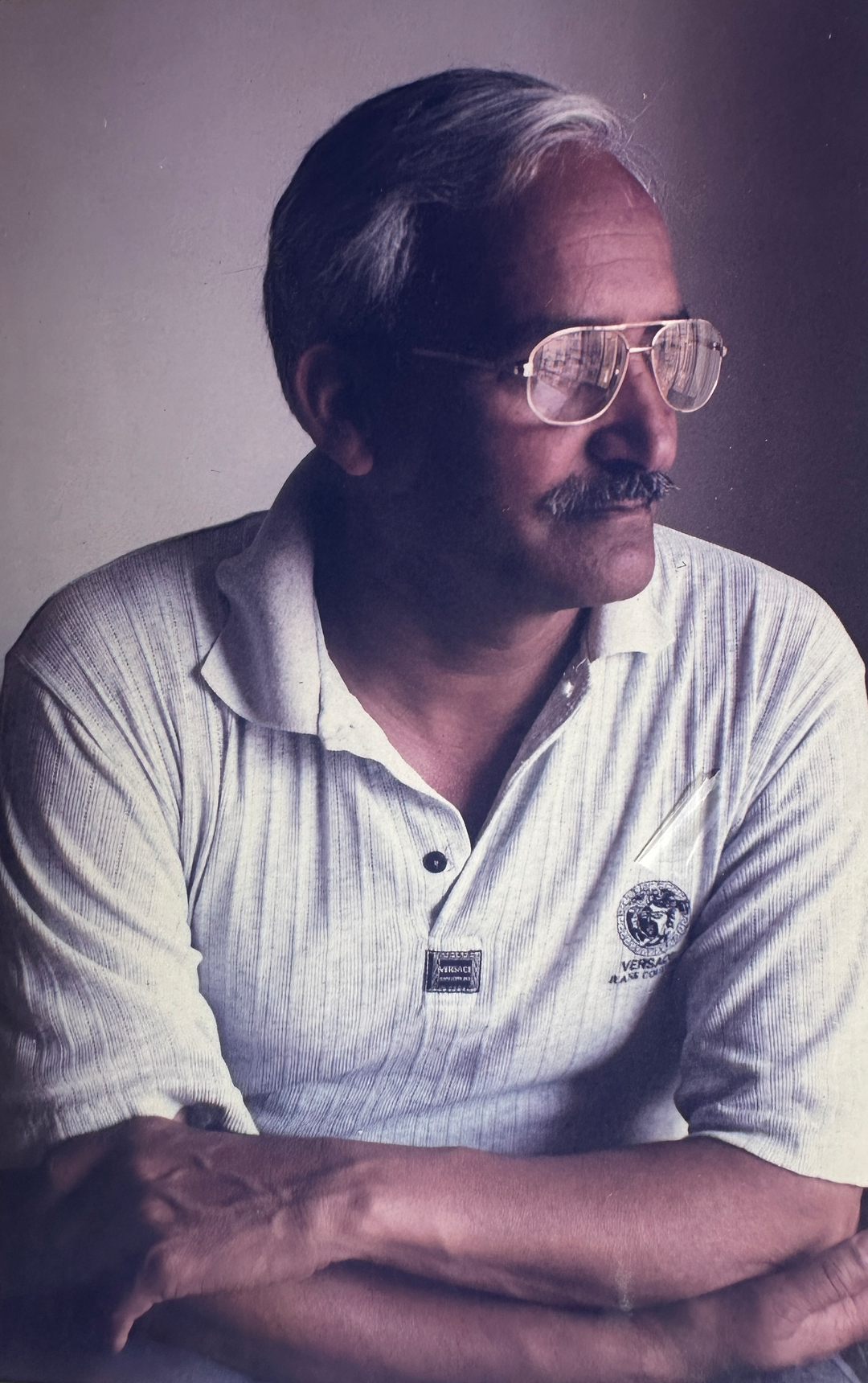
A few months before his death, while we were on a road trip, the conversation turned towards human mortality. “Death is just a transformation. It’s just like wearing a new set of clothes, taking a new body. Why do we all make such a big deal about it?” This was typical of his non-sentimental and practical outlook to life, and extended to afterlife as well. His philosophy was a product of the world he grew up in (born 1946): an India where things were scarce and opportunities rare, schooling in a village, a world that imposed limits on what one was allowed to even dream. Everyone was practical in this world. Self-control and discipline was the only thing that one could control. He found his match in the Army, and thrived there for a while. The Army gave him the escape and shaped his thinking in profound ways, but his restless spirit wanted a lot more. His life is a story of conscious transformation, and the imposition of will on life.
The Spirit of Discipline and Rigour
Discipline and rigour was his motto. He didn’t even allow the indiscipline of an unshaven stubble until well into his retirement. He decided that running was good for me. And no common cold or a sniffle in the cold mountain air of Dharamshala, where he was posted to lead a ‘Signals unit’, could be an excuse to miss the daily morning run for his 13-year-old son. I would be running alongside him, occasionally joined by my younger sister too. Following us would be the jawans from his army unit for the morning jog. He would keep repeating ‘Adventure is just adding an extra degree of difficulty to normal things’. So on Sundays when the soldiers had the day off, we would go for a slightly longer run, because it was a ‘special day,’ as he would say with a grin. Weakness in any way and form had to be stamped out. My mother was the softening force between him and his kids, the keeper and nurturer of our softer energies, who brought a balance to all our lives that was much needed.
For him everything had to have a purpose. So activities had been classified as frivolous or useful. TV, Sunday cartoons, playing hide and seek were frivolous. What was useful was learning horse-riding, a weekend hike up the mountain, a drive down to Mandavi beach (in Gujarat, when he was posted in Bhuj), reading books, an afternoon reading up a tome of general knowledge book. Entertainment was defined by active participation, and not passive consumption. He was much too restless to allow it for himself or his family. Once when my mom went away to her parents’ house for a few weeks, he took charge of the kitchen. So it was a couple of weeks of boiled nutritious veggies, raw food and salads, and soups. The goal was to not get swayed by the taste but to focus on the nutrition. By the end of the first week I had developed a taste for the tasteless food, and it became one of the many ‘adventures’, the legends of our family experiences.
The Life of Action and Dreams
I sat down at his table, scanning his papers that he left behind – of property, bank accounts, identity documents, pension papers. Typical of most Indian families, there wasn’t much order to any of it. Scanning through the little pieces of papers, half-scribbled notes, and diaries I could piece together the life he had created for himself, and a sense of the dreams he was dreaming. There was a brochure of a greenhouse unit, a cash flow calculation of returns from floriculture, of fisheries business, a small-scale manufacturing business. There were lists of small loans he had given to his staff.
It created a picture of a life of creativity, and action. I met the people, vendors and contractors who knew him or worked for him, and I saw a side of him that I had not noticed before – he invested in relationships. Even though many of them abused his trust, or didnt do a good enough work, he would still stay invested with them. And they adored him.
His restless energy translated into a constant cycle of creation and dreaming, and there were no half-measures in his life. He was always all-in. Once, he decided that photography is something he is interested in. The next day, he had bought all the second-hand photography books and magazines he could lay his hands on in all the book dealers around town. Soon there were a couple of SLR cameras floating around the house. And a big part of his salary started going into the images he clicked. Some of them were good, and many weren’t. But I got hooked to it and still carry it as my key passion, a bit of his fire still burning in me.
The Ultimate Transformation
He was always obsessed with health, beginning with the discipline of getting up early, morning walks or runs, yoga. This passion grew into his interest in Ayurveda. As his retirement came close, he underwent a profound transformation – from a soldier to a healer. Soon the house was full of ayurvedic texts, roots and branches and barks of rare herbs. To the disapproval of my mother, her kitchen was turned into a mini pharma unit, where powders were meticulously prepared and then put into small ‘pudiyas’ of paper to hand out to heal anyone who had any illness – with the word of his cures spreading. He soon got himself a formal degree in Naturopathy. He went in with a wide range of knowledge, and came out of the course with unique insights at the intersection of Naturopathy, Ayurveda, Suzok, Pranic healing, Yoga, reiki, and good old army style motivation. His clients grew rapidly. They loved him, and looked at him as their mentor. Their lives were transformed; so many had reversed their illness to a point of disbelief, and they owed him their lives.
He believed in the potential of villages, the resources that merely had to be harnessed to build utopia. He jumped in with his characteristic style to cultivate the piece of land his father left in his name. He applied the latest techniques to grow his crop, and got nominated as the ‘model farmer’ by the sugar mills in the area. His were the tallest sugarcane in the whole village, the healthiest crop, most returns per acre, till he realised that he hadn’t thought through the whole chain of what it takes to sell his produce to the sugar mills – the quota ‘slips’. Not the one to give up, he took a cab to the nearest government office and blasted them all for being corrupt and inefficient. They hadn’t encountered a force of nature like him. Soon he had the most quota-slips allocated to him, which he was happy to distribute to others in the village. But his vision was running into the work ethic of an Indian village, and their laid-back attitudes. He grew frustrated and withdrew from it to focus on his work of healing.
This relentless insistence on his own vision came with a cost. His love had an edge of anger, and aggressiveness. The world had to understand that his anger was justified. Except that they didn’t always. He wanted things a certain way, and he probably got more than he could have asked for, but it wasn’t his way and that disappointed him. The army ‘field postings’, where family wasnt allowed were tough on him and all of us. He would come back on leave and see a rebellious son and daughter growing into people that weren’t of his making anymore. It was as if we were going off the script he had in mind. I was evolving and exploring a world he hadn’t experienced or seen. Things were strained between us. I had to grow out of his shadows if I had to find my voice – a rite of passage for most sons with assertive fathers. We eventually reached a point of acceptance towards each other, but we both also had some lines that we had drawn.
The Final Passage
After that fateful message about his death, came a flurry of travels, rituals, prayers, ceremonies, and logistics, which didn’t leave me with much time to grieve (which came later when my health collapsed unexpectedly, forcing me to slow down). I sat at the prayer (Shanti Paath), reciting the chants he taught me himseldf. He had once decided that Indian culture needed saving, and had dived into the vedic chanting with gusto and had soon read through and memorised all the chants that came his way. But typical of his enthusiasm for life, if he was interested in something then it had to be transferred to others around him. So he had sat me down and made me (and my sister and my mother) repeat the chants after him, memorising them, least concerned if I had a maths exam the next day or not… the cultural heritage of India was at stake!
At his prayer meeting, I held the mic thanking all those who had come, remembering his message to stay tough, and holding my grief back. The hall was full. I don’t know most people there. There were army officers who had served with him, there were the people he had healed, there were the workers he had worked with, there were his brothers and sisters and distant relatives. Everyone found their moment to come and talk to me, tell me how he had changed their lives. He was still alive in their hearts and mind, and in the little ideas he had left behind.
He was curing the world, but ignoring his own health. While he was the strongest and the healthiest 77-year-old, there were some signs of high blood-pressure (and maybe some other undiagnosed underlying conditions). But he waged a war with his body. He almost won it, till one night he didn’t wake up from his sleep. He was the strongest oldest man when we lost him. In his death he had achieved the goal of defeating old age, by bypassing it entirely at the peak of his health.
His army unit sent a wreath for his funeral. They offered it to his pyre, sharply dressed army soldiers , offering their condolence and farewell to a brother in arms with a formal and precise ritual. It felt more poignant than all the religious rituals. I carried his ashes in a bag in my lap. The ashes hadn’t fully cooled even after two days, and I wasn’t surprised – he had too much fire in his bones. We drove in his new car he has just bought and which he was proud of, carrying his ashes to scatter them in the river Ganga. We lit and floated a Dia in his name down the river. My cousin leaned over to push the water to help dia avoid the collision with other boats. The dia found its way out to the centre of the river. He exclaimed, ‘It is through,’ and I teared up, knowing he had passed into that other dimension. I could imagine his restless spirit already thinking of his next project. He had achieved another transformation on his own terms, leaving the burden of sadness on the living – I am sure he would be disappointed that we were all unable to live up to his philosophy on mortality.
Other Blogs
Immersion In Ganpati Visarjan, 2026 – A Photoblog
A tear rolls down his cheek. His face looks like that of a man who…
No Safety Shot – The Cost Of Greatness
I am thinking about what makes an image, Great. It’s World Photography Day today, and…
The House of Pooran – Building My Sovereign Ai
My Mac mini arrived ahead of schedule — and, more importantly, before the price hike…